Elysium Health™ Research Demonstrates Improvements in Menopause Symptoms and Estrogen Balance with Basis™ and Reveals New Insights into NAD+ Metabolism
PR Newswire
NEW YORK, July 9, 2026
Findings demonstrate significant improvements in major disruptive menopausal symptoms and a beneficial increase in E2/E1 ratio
NEW YORK, July 9, 2026 /PRNewswire/ -- Elysium Health, Inc.™, the leading longevity science company, today announced new research published in Frontiers in Aging demonstrating significant improvements in disruptive menopausal symptoms in women taking Basis™, the company's flagship product clinically proven to raise NAD+ levels. The study also showed a significant increase in the ratio of estradiol (E2) to estrone (E1)—two key forms of estrogen—restoring it to a more favorable balance. Lastly, the study characterized a previously unreported NAD+ metabolite, providing new insights into NAD+ metabolism and utilization. To help advance Elysium's work in the underserved area of women's health, the company also announced the addition of Yousin Suh, Ph.D., Charles and Marie Robertson Professor of Reproductive Sciences in Obstetrics and Gynecology and Professor of Genetics and Development, and Director of the Reproductive Aging Program at the Vagelos College of Physicians and Surgeons at Columbia University, to its esteemed Scientific Advisory Board.
The open-label pilot study evaluated 40 healthy women over 35 years of age, 32 of which self-reported symptoms associated with the menopause transition (MS group) and eight women who were not experiencing any (or minimal) symptoms associated with menopause (No-MS group). After seven days of Basis supplementation, participants in the MS group self-reported significant reductions—by 50% or more—in the frequency and severity of several of the most disruptive menopause symptoms, including hot flashes, bloating, and poor sleep. While symptom improvement represents an important outcome for women navigating the menopause transition, researchers believe the biological findings may have broader implications for understanding the relationship between estrogen regulation and cellular metabolism.
"This study stemmed from my own experience with Basis helping with menopausal symptoms," said Marie Migaud, Ph.D., study co-author, longtime Elysium Health research collaborator, and Brian Metcalf Chair in Chemical Biology at The University of Western Australia. "From that experience we hypothesized that supporting NAD+ metabolism could help promote a healthier balance between estradiol and estrone during menopause. We were encouraged to see improvements in estradiol-to-estrone ratios alongside meaningful reductions in the frequency and severity of menopausal symptoms reported by participants. Unexpectedly, the study also led to the discovery of a previously unreported NAD+ metabolite, highlighting how much remains to be learned about NAD+ biology and opening new avenues for future research."
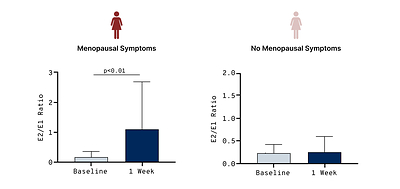
Among the study's most notable findings was a significant increase in the E2/E1 ratio. Estradiol (E2) and estrone (E1) are the two primary forms of estrogen in women, and shifts in their balance are a hallmark of menopause. The findings suggest a potential connection between NAD+ metabolism and estrogen balance, offering a new perspective on how age-related changes in cellular metabolism may influence women's health during the menopause transition.
The study also characterized a previously unreported NAD+ metabolite, adding to the scientific understanding of how NAD+ precursors are metabolized and utilized in humans. The finding expands the growing body of research surrounding NAD+ biology and may help researchers develop a more complete picture of the pathways involved in NAD+ metabolism and utilization.
"The identification of a previously unreported NAD+ metabolite in this study broadens our understanding of how NAD+ precursors are processed and utilized in humans," said Ryan Dellinger, Ph.D., study co-author and VP of Scientific Affairs at Elysium. "As the field moves beyond simply measuring NAD+ levels, a more complete understanding of NAD+ metabolism will yield more insights into healthy aging."
"Women's health, reproductive aging, and longevity are deeply interconnected, yet they remain underrepresented in aging research," said Yousin Suh, Ph.D., new Elysium Scientific Advisory Board member and Charles and Marie Robertson Professor of Reproductive Sciences in Obstetrics and Gynecology at Columbia University. "These findings are encouraging and suggest a potential link between NAD+ metabolism, estrogen balance, and symptoms experienced during the menopausal transition. While further studies are needed, this work underscores the importance of expanding research into the biological mechanisms underlying reproductive aging and identifying new approaches to support women's health across the lifespan. I am honored to join Elysium Health's Scientific Advisory Board and look forward to advancing research that deepens our understanding of reproductive aging and helps translate scientific discoveries into meaningful strategies for healthy aging in women."
The findings of this pilot study are encouraging and suggest a potential connection between NAD+ metabolism, estrogen balance, and menopausal symptoms. While additional research is needed, the results provide a foundation for larger, more rigorous studies designed to further evaluate the role of NAD+ support in women's health. Elysium plans to build on these findings through future clinical research, including a larger randomized, placebo-controlled trial.
These statements have not been evaluated by the Food and Drug Administration. This product is not intended to diagnose, treat, cure, or prevent any disease.
About Elysium Health™
Elysium Health's™ mission is to solve the biggest challenges in health with science, to help people lead healthier lives. Working directly with the world's leading scientists and clinicians, Elysium Health™ is committed to translating critical advancements in aging research into health solutions people can access today. Elysium Health™ is backed by General Catalyst, Morningside Ventures, Breyer Capital, Mayo Clinic Ventures, and other notable investors. Learn more at elysiumhealth.com.

 View original content to download multimedia:https://www.prnewswire.com/news-releases/elysium-health-research-demonstrates-improvements-in-menopause-symptoms-and-estrogen-balance-with-basis-and-reveals-new-insights-into-nad-metabolism-302821437.html
SOURCE Elysium Health