Polls Are Missing the Real Gen Z
PR Newswire
ATLANTA, Aug. 10, 2026
Nearly 5,000 Gen Z participants in a $1 million economics quiz reveal a generation far less ideologically settled than the headlines suggest—55% are still undecided, while their views on affordability and entrepreneurship challenge the conventional socialist stereotype.
ATLANTA, Aug. 10, 2026 /PRNewswire/ -- The news is full of stories about how Gen Z favors socialism. An online quiz taken by more than 4,900 Gen Zers paints a more nuanced picture of Gen Z—and every other generation.
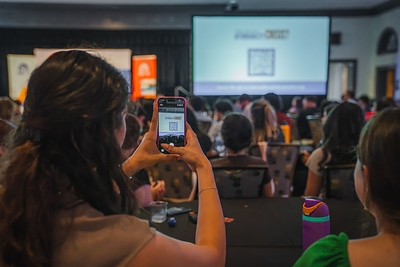
The Foundation for Economic Education is running a million-dollar quiz. Anyone who answers ten questions is eligible to be selected as one of 12 finalists in our Affordability Showdown, to be filmed later this year in Atlanta. The showdown winner will receive one million dollars (less 24% in federal taxes). The questions are designed to teach respondents how much government involvement sits behind the prices they pay.
Here's what we found: after working through concrete affordability questions, many Gen Z participants arrived at conclusions that don't fit the stereotype of an ideologically committed socialist generation.
To date, 57,000 people have taken the quiz, including 4,900 who identify as Gen Z. Of those, 55% describe themselves as undecided on economic systems. The rest are split between 28% capitalist and 17% socialist. The 3,696 Millennials who took the quiz look almost identical: 30.0% capitalist, 16.6% socialist, and 53.4% undecided.
Gen X shifts sharply: 57% capitalist, 36% undecided, and only 7.3% socialist.
Our participants aren't a random sample. They chose to click an ad, enter an economics contest, and answer ten questions for a shot at a million dollars. That group may be more curious about economics, more entrepreneurial, or simply different from Gen Z at large. We aren't claiming to have polled a generation. We're reporting what happened when 57,000 people actually worked through the material.
And on the broader question of where Gen Z is headed, properly sampled research points in the same direction. Intuit's 2026 entrepreneurship survey found 43% of Gen Z adults plan to start a business this year, more than Millennials at 39% and more than double Gen X at 21%. The Wells Fargo 2026 Money Study found that 69% of Gen Z consider business ownership part of the American Dream. That is not the profile of a generation waiting for the state to provide.
After completing the quiz, nearly 56% concluded that government subsidies and regulations have made problems like housing, healthcare, and education more expensive and harder to navigate, while fewer than one in six believed more government spending was the answer.
That is an educational result, and it matters because it suggests the gap isn't ideological conviction but rather information.
Which brings us back to the polls. Cato's latest polling shows Gen Z favoring socialism over capitalism by a narrow 53% to 45%—a margin, not a landslide. Most importantly, when asked what they mean by "socialism," most describe fairness, stability, and a shot at a normal life, not the nationalization of industry.
So, the polls aren't wrong. They're measuring something narrower than the headlines suggest. They're capturing how young people feel about a word, at a moment when housing, healthcare, and education have all gotten conspicuously out of reach.
There may also be something older at work. Psychologists have long noted that young people seek independence and develop their own identity in the process, but they note that it doesn't always become political or cultural rebellion.
Polls ask young people whether they like the word "socialism." A better question is whether they understand how the economy works. Based on nearly 5,000 Gen Z participants, many are still deciding what they believe. What they are not is a generation marching in ideological lockstep. They appear more economically curious, more entrepreneurial, and far less ideologically settled than the headlines suggest.
To learn more, take the quiz, or enter for a chance to win $1 million, visit www.MillionDollarQuestion.org.
About the Foundation for Economic Education
The Foundation for Economic Education (FEE) is a nonprofit organization dedicated to inspiring, educating, and connecting future leaders with the economic, ethical, and legal principles of a free society. Since 1946, FEE has helped millions of students and lifelong learners explore the ideas of free markets, individual liberty, and personal responsibility through educational programming, digital content, and public engagement.
 View original content to download multimedia:https://www.prnewswire.com/news-releases/polls-are-missing-the-real-gen-z-302847438.html
SOURCE Foundation for Economic Education (FEE)