Studiosity integrates the 'AI Assessment Scale' (AIAS) to strengthen AI assessment design in higher ed
PR Newswire
SYDNEY, Aug. 14, 2026
The burning platform issue being answered is: When AI can give all the answers, are students doing the thinking?
SYDNEY, Aug. 14, 2026 /PRNewswire/ -- Studiosity, the global leader in growing student learning in education, today announced a formal agreement to integrate the globally adopted Artificial Intelligence Assessment Scale (AIAS) into its assessment platform.
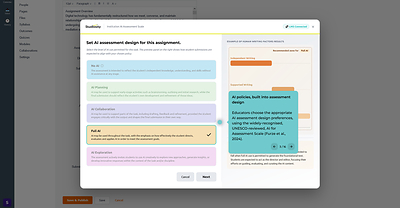
Studiosity now uses the well-known framework in its 'zero cognitive offload' platform, being used by universities in 15 countries. In a time when AI can 'give the answers,' universities deploy Studiosity to grow and validate graduates' critical thinking, via secure assessment and to reduce academic workloads.
"The AI Assessment Scale was created to give educators and students a transparent, shared language around AI use," said Dr. Mike Perkins, co-developer of the AIAS..
"Partnering with Studiosity gives us another way to support educators, and help them realise the purpose of the AIAS."
"A framework is not a silver bullet, it can't solve every academic integrity and security problem, but placed in context for educators this way, it becomes part of concrete task workflow; applied assessment design for student learning," said Dr Jasper Roe, co-developer of the AIAS.
"There are many ways educators have been operationalising the AIAS, and its inclusion in the Studiosity platform now takes the scale's purpose and makes it an accessible, consistent tool for educators every day, while empowering students to self-validate their authorship prior to submission," said Perkins.
As student access to generic AI becomes universal, the chasm between institutional AI policy and assessment assurance has largely been filled via additional staff workload, which is unsustainable.
What is the scale?
Originally developed by Mike Perkins, Leon Furze, Jasper Roe and Jason MacVaugh, the AIAS provides a structured 5-level scale empowering academics to decide what role AI should play in an assessment task, and redesign the tasks so that the decisions hold up in practice. Studiosity's technology operationalises this framework by embedding these options directly into the educator's usual LMS task setup workflow.
Key outcomes for the system:
- Tailored assessment combinations: Educators can pair the 5 AIAS design levels with three distinct authorship validation thresholds based on assignment risk and learning objectives.
- Formative scaffolding: Studiosity grows critical thinking without 'cognitive offload' that is the major concern in education.
- Auditable validation of graduate thinking and learning: Students self-validate their submissions through structured Q&A and authorship continuity checks, enabling educators with a definitive validation of student learning for any task.
"University leaders and educators have made it clear that detection is a dead end and surveillance undermines the trust essential to learning'. Flexible, AI-ready assessment design coupled with student authorship self-validation provide the assurance of student cognitive development that underpins the degree.'," said Mike Larsen, CEO at Studiosity.
Prof Judyth Sachs, Studiosity's Chief Academic Officer said: "Integrating the AIAS framework into our integrity layer gives academics much greater confidence that they are adhering to policy in their assessment design, in a way that preserves educator and student agency, first."
 View original content to download multimedia:https://www.prnewswire.com/news-releases/studiosity-integrates-the-ai-assessment-scale-aias-to-strengthen-ai-assessment-design-in-higher-ed-302851458.html
SOURCE Studiosity USA Inc.